
Let’s have a heart-to-heart.
You’re a small business owner. You’re the CEO, the marketing department, the customer service rep, and occasionally the person who remembers to buy more coffee for the breakroom. Your time isn’t just money; it’s your sanity.
So, when you hear the word "CRM" (Customer Relationship Management, for those who haven’t been forced to sit through a corporate seminar), your brain probably goes to one of two places:
- "That sounds like something a Fortune 500 company uses to track their private jet fuel consumption."
- "I signed up for one once, spent three days trying to customize a 'lead scoring' module I didn't understand, and now I just use a Google Sheet and a prayer."
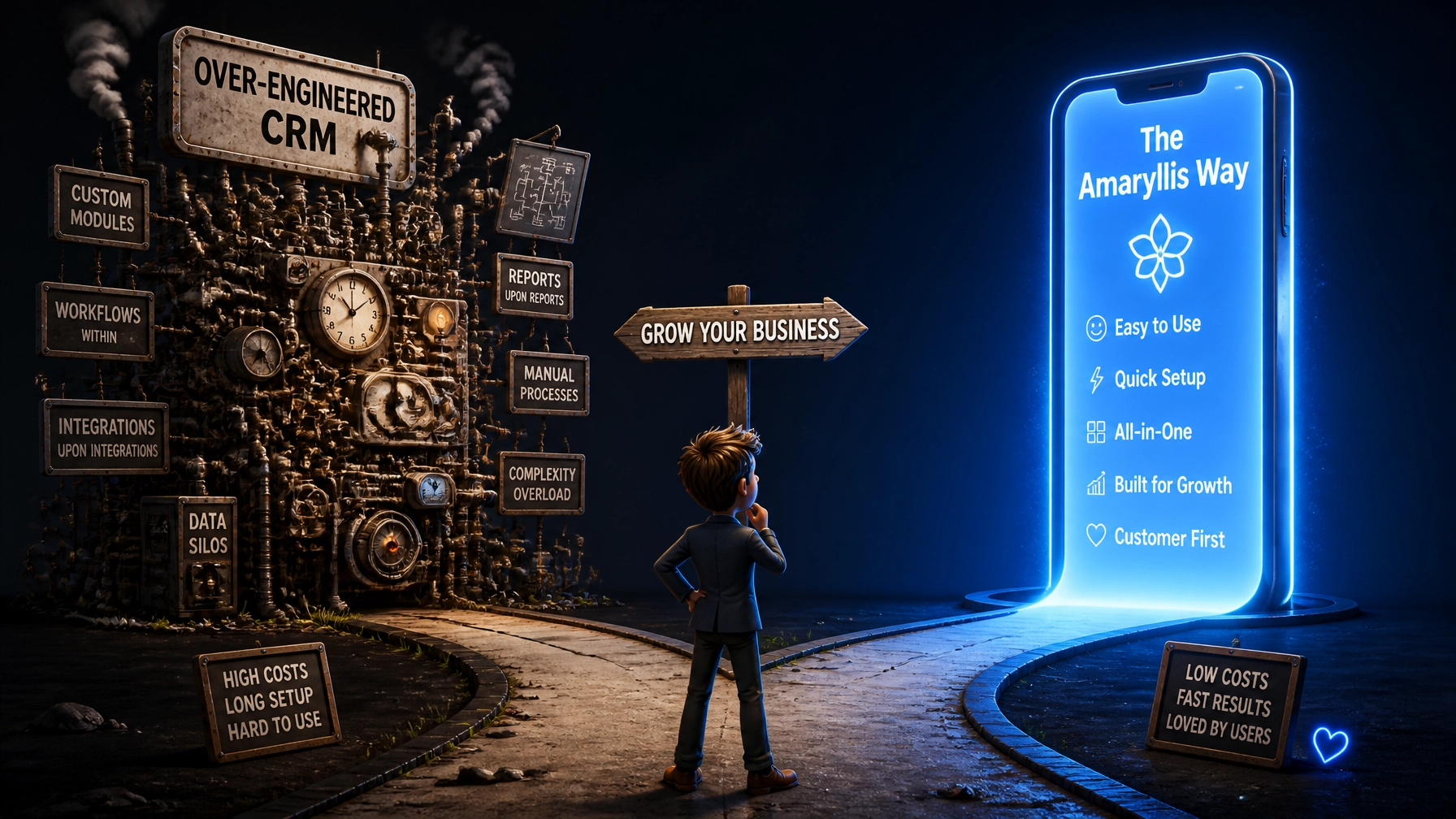
Here is the truth, delivered without the typical agency fluff: You probably don’t need a complex CRM. In fact, buying a massive, enterprise-grade CRM when you’re a local service provider or a growing small biz is like buying a literal space shuttle just to drive to the grocery store. It’s expensive, it’s confusing, and you’re probably going to crash it into a curb.
At Amaryllis Digital Studio, we spend our days fixing "Frankenstein systems", CRMs that have been bolted together with so much complexity that the business owner is actually scared to touch them.
Let’s talk about why "simple" is your new best friend and how you can actually start getting results without a degree in database architecture.
The "More is Better" Lie
We live in a world of feature-bloat. When you look at CRM pricing pages, they love to highlight things like "AI-powered predictive forecasting," "multi-region currency conversion," and "advanced sentiment analysis."
Does your local plumbing business need to know the "sentiment" of a lead who just has a burst pipe? No. They’re stressed. That’s the sentiment. They want a human to show up and fix the leak.
When you buy into a complex system, you aren't just paying for features; you're paying a Complexity Tax. This tax comes in the form of:
- Implementation Paralysis: You spend months "setting it up" and zero months actually closing deals.
- The Learning Cliff: Your team (even if it’s just you) hates using it because it requires twelve clicks just to log a phone call.
- Feature Fatigue: You’re paying $150/month for a system where you only use the "Contact Name" and "Phone Number" fields.
What You Actually Need (The "Don't Overthink It" List)
If you're operating on a real-world budget, you don't need a spaceship. You need a reliable truck. A good CRM for a small business should do exactly four things, and it should do them while you're half-asleep:
- Centralize Your Humans: All your leads and customers in one place. No more hunting through your Gmail, your Instagram DMs, and that notebook you left in the car.
- Visual Pipelines: You need to see, at a glance, who is "just looking," who has a quote, and who is ready to pay you.
- Basic Automation: If someone fills out a form on your site, the CRM should say "Hello" for you. If you haven't talked to a lead in three days, the CRM should nudge you.
- Follow-up Reminders: Because humans forget things. Computers don't.
That’s it. Everything else is just expensive wallpaper.
The Amaryllis Approach: Start Where You Are
At Amaryllis, we’re Zoho CRM specialists, but we aren't the kind of specialists who try to sell you the whole ocean. We believe in a modular approach. We know you’re on a budget, and we know you need to see a return on investment now, not in six months.
That’s why our systems are built in layers. We start with the foundations: getting you found and getting your leads organized.
The WhatsApp Lead Pipeline: Your Secret Weapon
Most small businesses are losing leads because they take too long to respond. In the age of instant gratification, a two-hour delay is an eternity.
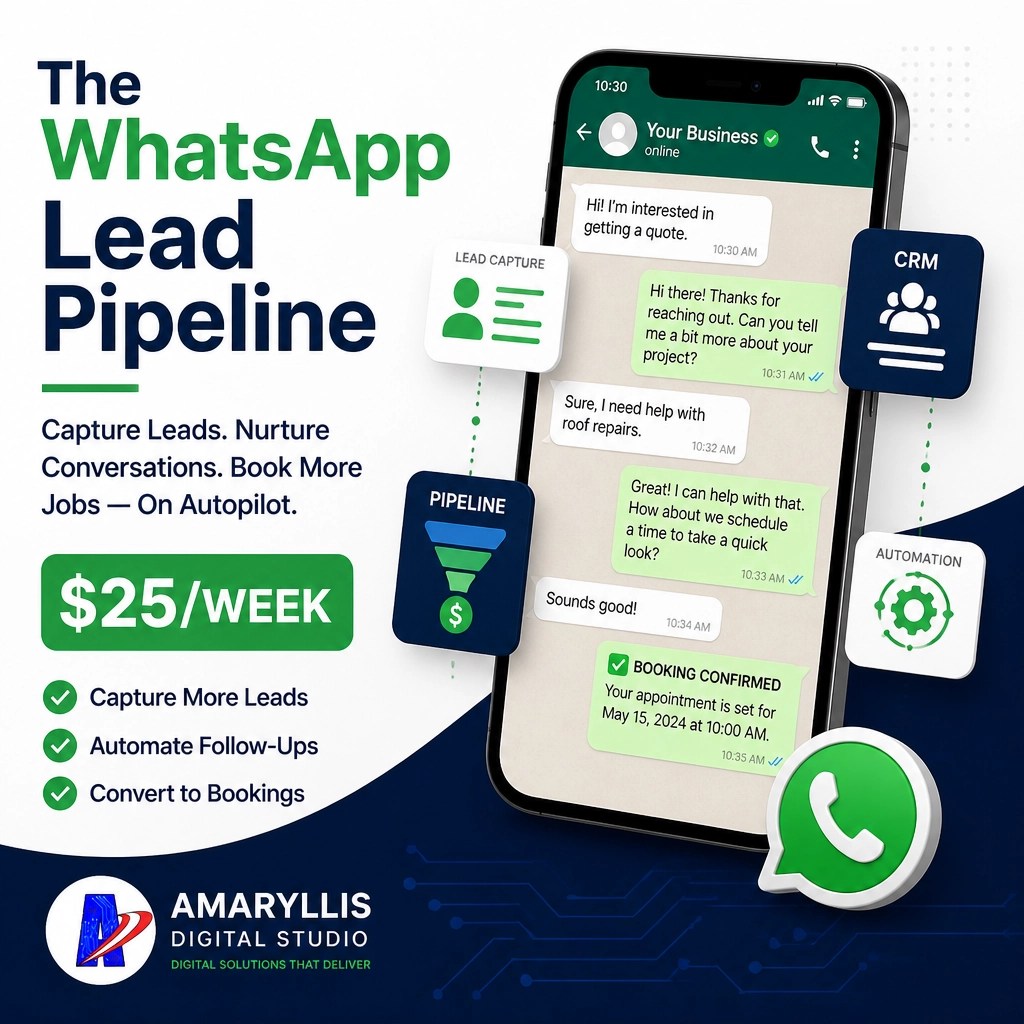
We created the WhatsApp Lead Pipeline ($25/week) specifically for this. It’s a dead-simple, highly effective way to funnel your leads directly into a place where you can actually talk to them. No complex logging, no weird "portals": just business getting done where your customers already are.
The Google Visibility Engine: Feed the Machine
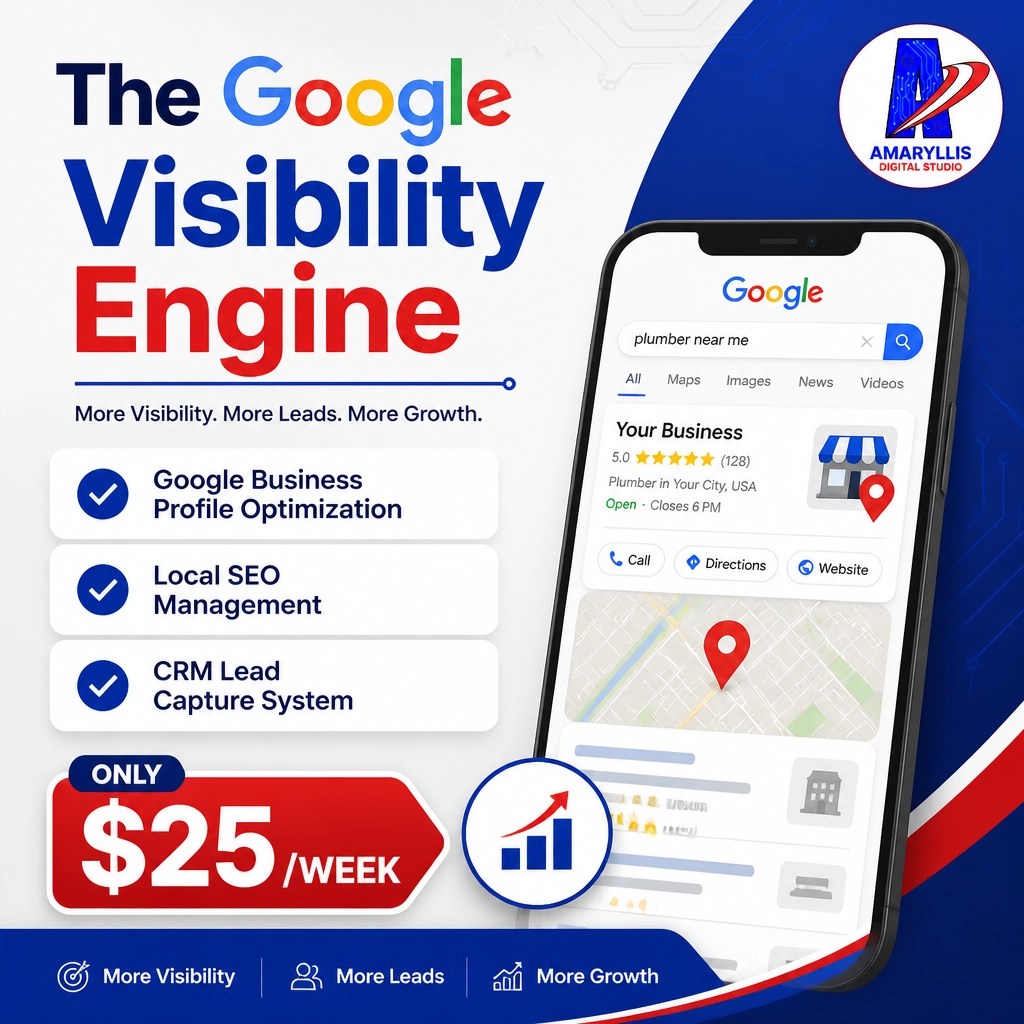
A CRM is useless if it’s empty. You need people coming in the front door. Our Google Visibility Engine (also a breezy $25/week) is designed to make sure your Google Business Profile isn't just sitting there gathering digital dust. We tune it to be found and to convert, so your CRM actually has some work to do.
When Should You Get "Complex"?
Look, we love a good automation workflow. We can build multi-step, logic-branching, "if-this-then-that" masterpieces that would make a Silicon Valley engineer weep with joy. Our Authority Package is designed for exactly that: businesses that have outgrown the basics and need to establish total market dominance.
But here’s the kicker: You don't start there.
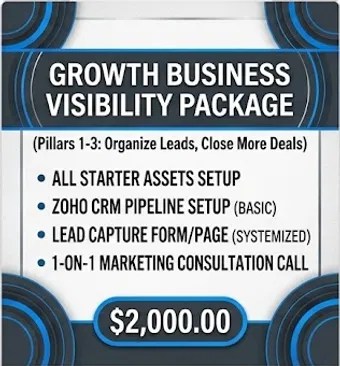
You start with our Starter or Growth packages. We set up the core platforms, optimize your bios, and build a Zoho CRM pipeline that actually makes sense for your specific workflow. We make you look professional everywhere you show up, without making your daily life a nightmare of software updates and "system errors."
The Bottom Line: Complexity is a Choice
You don’t need a complex CRM to be a successful business. You need a functional system that respects your time.
If your current "system" involves you frantically searching your text messages for a client’s address, or if you’ve been paying for a CRM subscription that you haven't logged into since 2024, it’s time to simplify.
Stop trying to build a digital empire on a foundation of confusion. Let’s build something modular, something WordPress-ready, and something that actually grows with you.
Ready to stop the CRM headache? Take a look at our packages or just reach out. We promise to keep it witty, keep it casual, and: most importantly: keep it simple.

Leave a Reply