
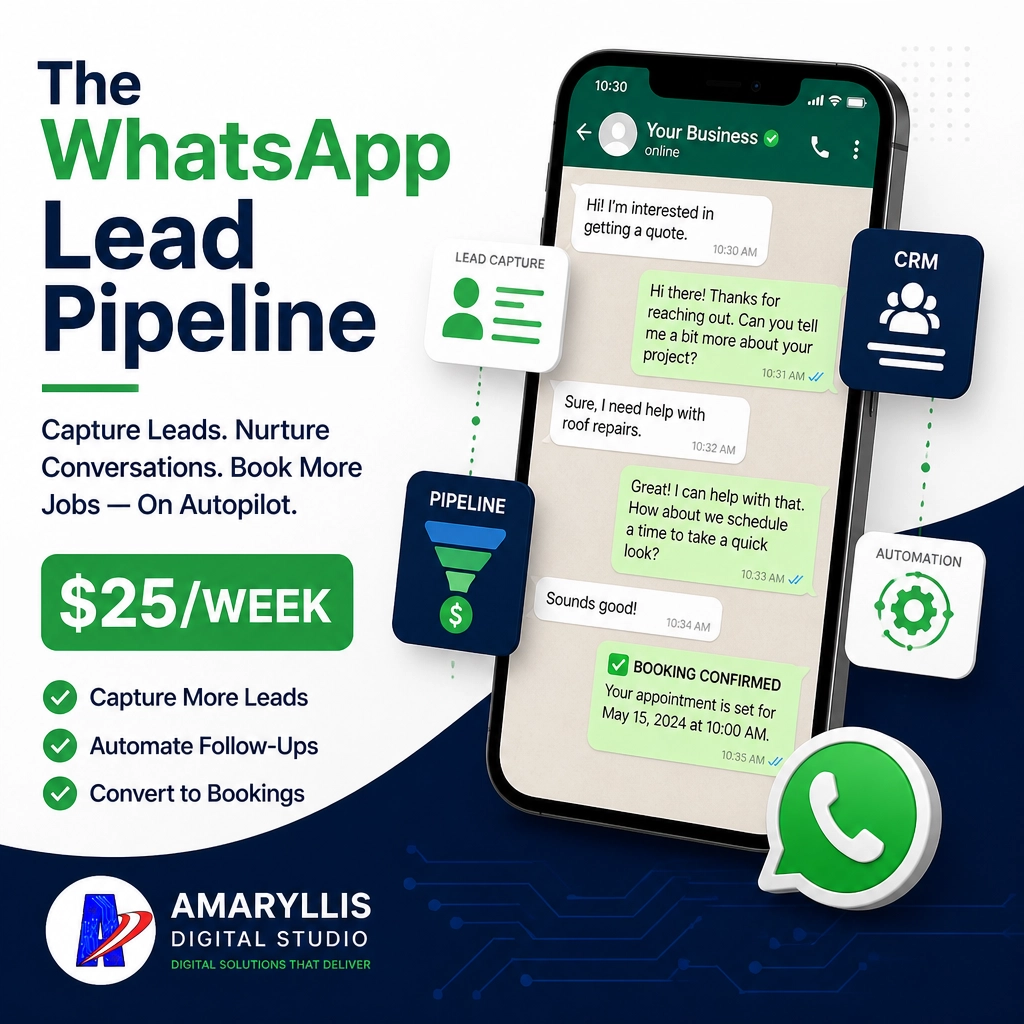
You get a new inquiry while you’re under a sink, on a roof, behind the wheel, or elbow-deep in someone’s very unfortunate plumbing situation.
You think, I’ll call them back when I’m done.
Then the job runs long. Dinner happens. The dog needs something. Tomorrow arrives with three more fires to put out.
By the time you follow up, the lead has already hired someone else.
That is the follow-up gap: the hours or days between a person raising their hand and your business actually responding. And for many small businesses, it is not a quality problem. It is a timing and systems problem.
Your service may be excellent. Your prices may be fair. Your customers may love you.
But leads do not know that yet. They only know whether someone responded.
The follow-up gap is costing more than you think
Most small business owners do not ignore leads on purpose. They are simply doing five jobs at once.
They are answering calls, delivering the service, ordering supplies, managing staff, sending invoices, and trying to remember which person asked for a quote last Tuesday.
That last part is where things get wobbly.
A lead may come in through:
- A Google Business Profile call
- A Facebook or Instagram message
- A WhatsApp conversation
- A website form
- An email
- A referral text
- A voicemail left during business hours
If each inquiry lands in a different place, your follow-up process depends on memory. Memory is a charming thing, but it is not a reliable lead management system.
The cost of one missed opportunity can add up quickly. For example, if your average job is worth $600 and you miss just two good-fit inquiries in a month, that is $1,200 in potential revenue that never reached your pipeline. The actual number will vary by business, of course, but the principle is simple:
The leads you already paid time and money to attract deserve a better fate than disappearing into an inbox.
Fast responses matter because people often contact several businesses at once. They are not necessarily loyal to the first company they find. They are looking for the company that makes the next step easy.
A quick acknowledgment does not guarantee the sale. It does keep the conversation alive long enough for a human follow-up to happen.
What a healthy follow-up process looks like
Good follow-up does not mean pestering people every 14 minutes with “Just checking in.”
It means being helpful, clear, and consistent.
A simple sequence might look like this:
- Immediately: Confirm the inquiry arrived and explain what happens next.
- Within the next business hour: Create a task for the right person to call or respond personally.
- After two or three days: Send a useful follow-up related to the customer’s problem.
- Around day seven: Close the loop with a short, polite check-in.
- Later: Move non-responsive leads into a light nurture sequence rather than forgetting them completely.
This is the foundation of automated lead follow up systems. Automation handles the timing and reminders. You handle the expertise, the relationship, and the part where a real person says, “Tell me what’s going on.”
The three-part system that closes the gap
At Amaryllis Digital Studio, we build small-business systems in modules. You do not need to purchase a giant technology maze with seventeen dashboards and a monthly bill that requires its own therapist.
You can start with the piece creating the biggest problem today and add the next piece when you are ready.
1. Capture leads where people already find you
A website is useful, but it should not be your only front door.
People may discover your business through Google, send a message on Meta, or tap the WhatsApp button because that is the app they already use every day. If your lead capture strategy depends entirely on someone visiting your website, filling out a form, and waiting patiently, you are asking customers to take the scenic route.
Our approach connects the places where people already look for local businesses:
- Google Business Profile for search and map visibility
- Facebook and Instagram for social discovery and direct messages
- WhatsApp for fast, conversational inquiries
- Website forms for customers who prefer a traditional request process
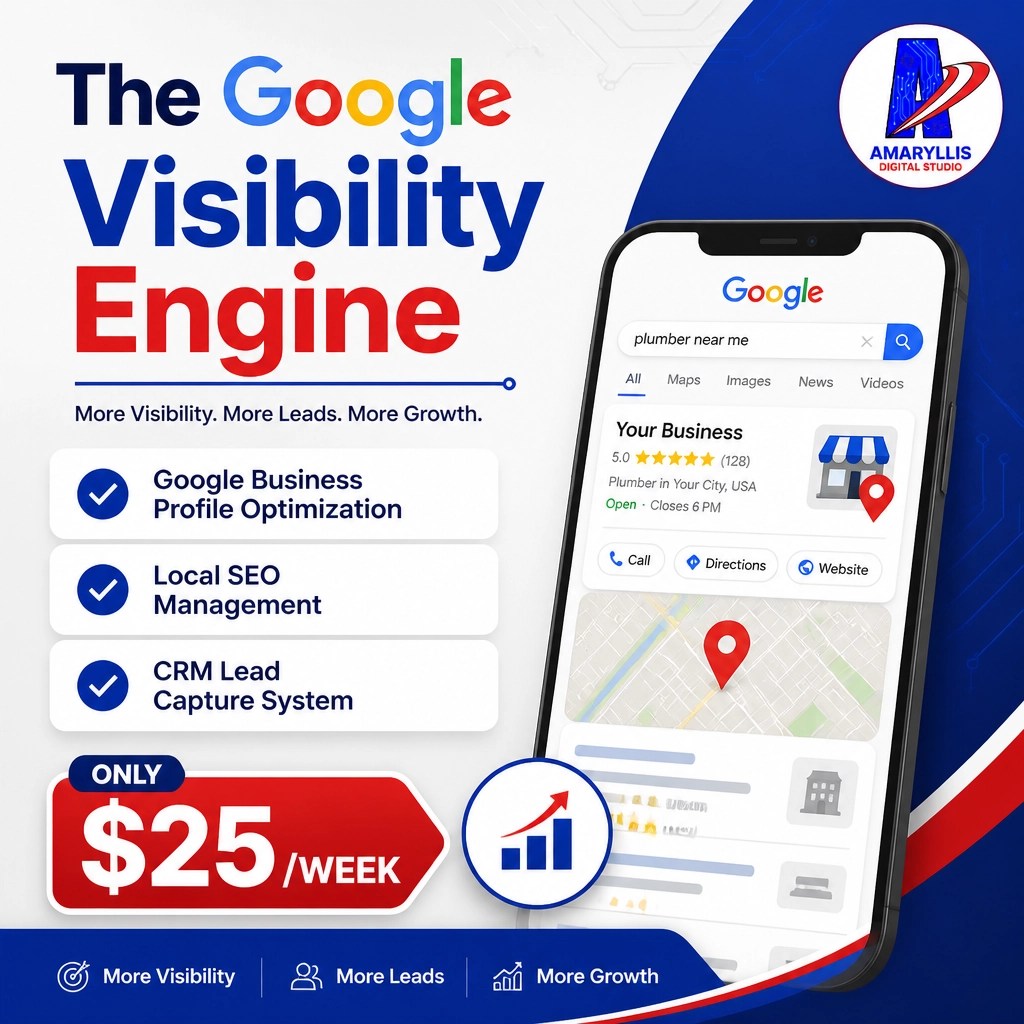
This is where lead capture systems become practical. The goal is not to be everywhere just for the sake of being everywhere. The goal is to make it easier for the right customer to contact you, wherever they happen to find you.
We can also help keep your business information, bios, messaging, and branded graphics consistent across those platforms. A customer should not have to wonder whether your Google listing, Facebook page, and WhatsApp profile belong to the same business.
2. Give every lead a stage and an owner
A message in an inbox is not a pipeline.
A pipeline tells you:
- Who the lead is
- Where they came from
- What they need
- Which stage they are in
- Who is responsible for the next step
- When that next step should happen
That is the difference between “I think someone answered them” and “This lead is assigned to Jamie, waiting for a quote, with a follow-up task due tomorrow.”
With a Zoho CRM setup for service providers, we can create stages that match the way your business actually sells. For example:
- New inquiry
- Contact attempted
- Qualified
- Estimate or proposal sent
- Follow-up needed
- Booked
- Won
- Not ready yet
- Closed or lost
Zoho CRM supports workflow rules that can trigger instant or scheduled actions when conditions are met. It also supports assignment rules, so leads can be directed to the appropriate person based on factors such as source, location, service type, or availability.
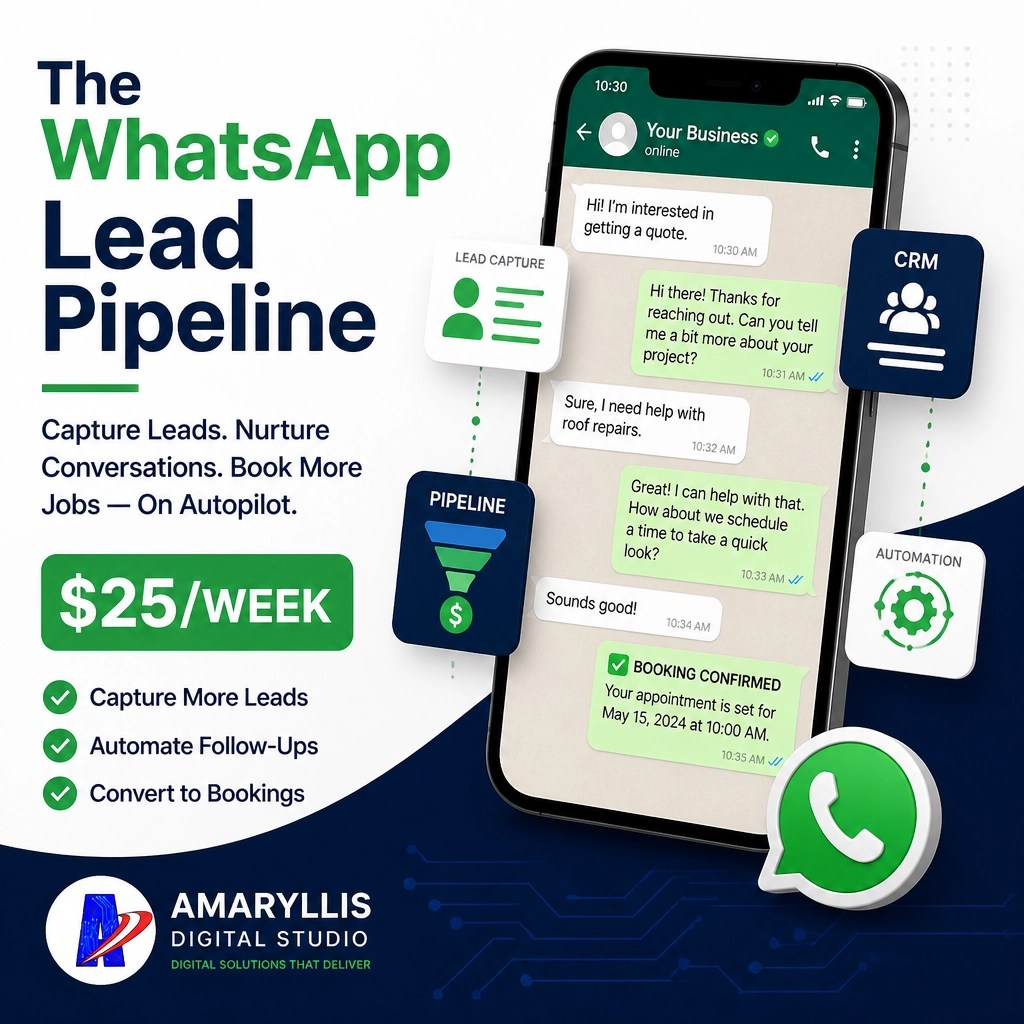
That structure matters even if you are a one-person business. You are still the owner of the lead, but the system can tell you what needs attention and when.
No more scrolling through old messages while muttering, “I know they contacted me somewhere.”
3. Automate the follow-up while you do the work
Once a lead enters Zoho CRM, the system can begin doing the repetitive work.
A practical sequence might include:
- An immediate acknowledgment that confirms the inquiry
- A task reminding you to make the personal call
- A scheduled email with helpful information
- A reminder when a proposal has not received a response
- A day-seven “still need help?” message
- A longer-term nurture path for people who are interested but not ready
This is small business marketing automation at its best: not flashy for the sake of being flashy, but quietly useful.
You still decide what the messages say. You still approve the timing. You still decide when a lead becomes a customer. The automation simply makes sure the process does not collapse every time you get busy.
That is especially valuable for service providers who spend most of the day away from a desk. Your follow-up system can keep working while you are on a job, driving between appointments, or finally eating lunch without holding a phone in one hand.
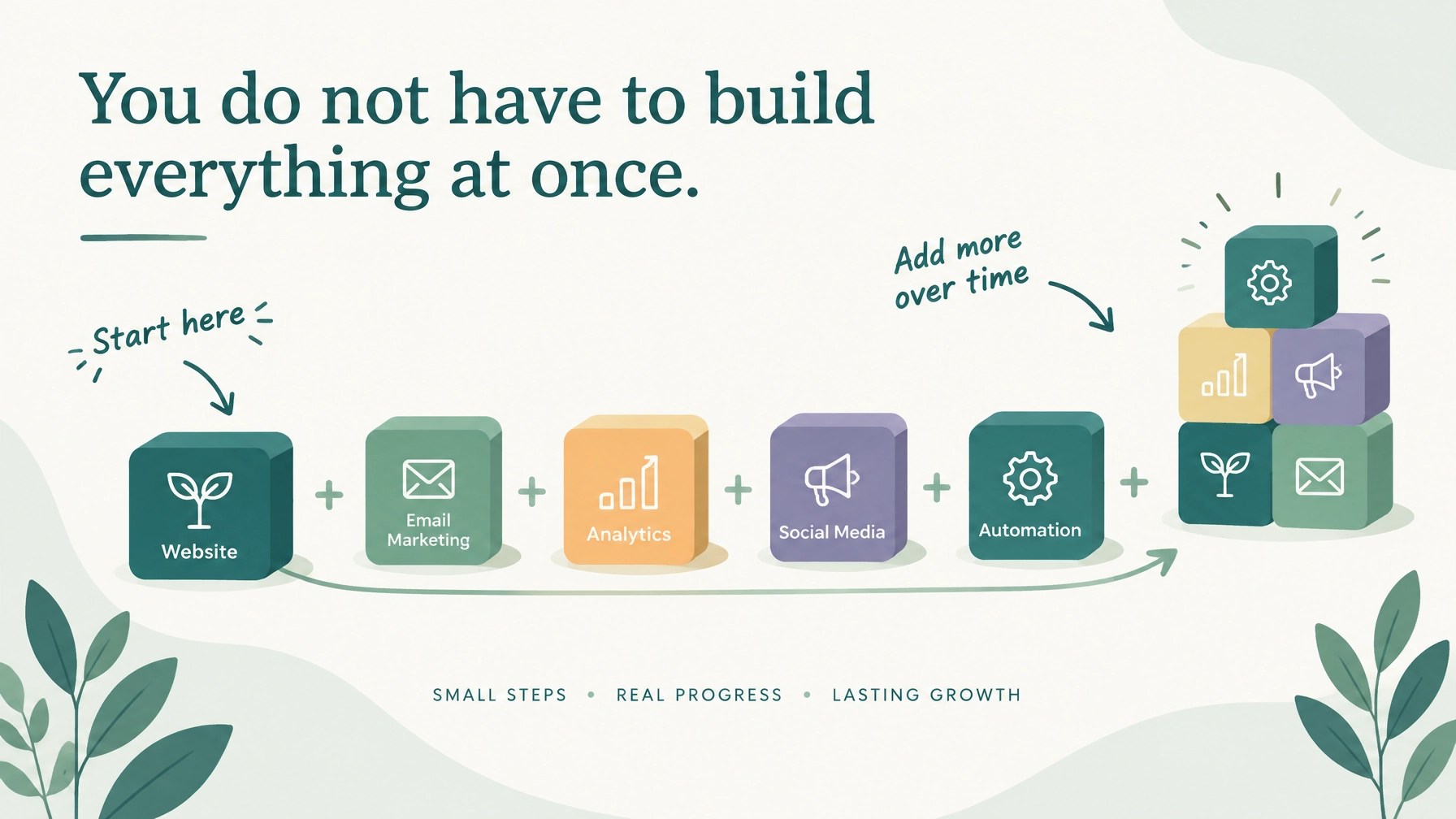
You do not have to build everything at once
A common objection is, “This sounds useful, but I probably need a whole new marketing department.”
You do not.
A modular system lets you start with the most urgent gap:
- Need to be found? Start with Google Business Profile, Meta, and WhatsApp setup.
- Getting inquiries but losing track of them? Start with a Zoho CRM pipeline.
- Remembering to follow up is the problem? Start with automated workflows and task reminders.
- Looking inconsistent online? Start with branded graphics and messaging.
Then connect the pieces over time.
At Amaryllis Digital Studio, we use transparent fixed pricing rather than bloated retainers. We scope the work, explain what is included, and give you a clear price before we begin. You own what we build, and the delivery is designed to be WordPress-ready when your website is part of the project.
That means you can improve your lead management without signing up for a mysterious agency arrangement where “strategy” appears on the invoice every month wearing a tiny top hat.
The best next step is usually a small one
You do not need perfect automation. You need a dependable first response, a visible pipeline, and a follow-up process that does not live entirely inside your head.
If leads are going cold, ask yourself:
- How quickly does someone receive a response?
- Where do new inquiries go?
- Does every lead have a clear owner?
- Can you see the next action at a glance?
- What happens if a prospect does not reply after the first message?
If the answers are “it depends,” you have found the follow-up gap.
Amaryllis Digital Studio builds practical lead management for small business, from visibility and capture to Zoho CRM automation and multi-step follow-up. You can tell us about your business and receive a clear plan with fixed pricing, or review the Starter Package if your first priority is getting found across the platforms customers already use.
Your leads are not necessarily cold.
They may simply be waiting for a system that remembers to keep the conversation warm.
Leave a Reply